Who Should You Call When a High-Use Solar System Starts Underperforming?
A solar and battery system is designed to generate and…

Why you can trust our content
We know that the solar industry is full of misinformation, but we only use reliable sources, including:




At a glance
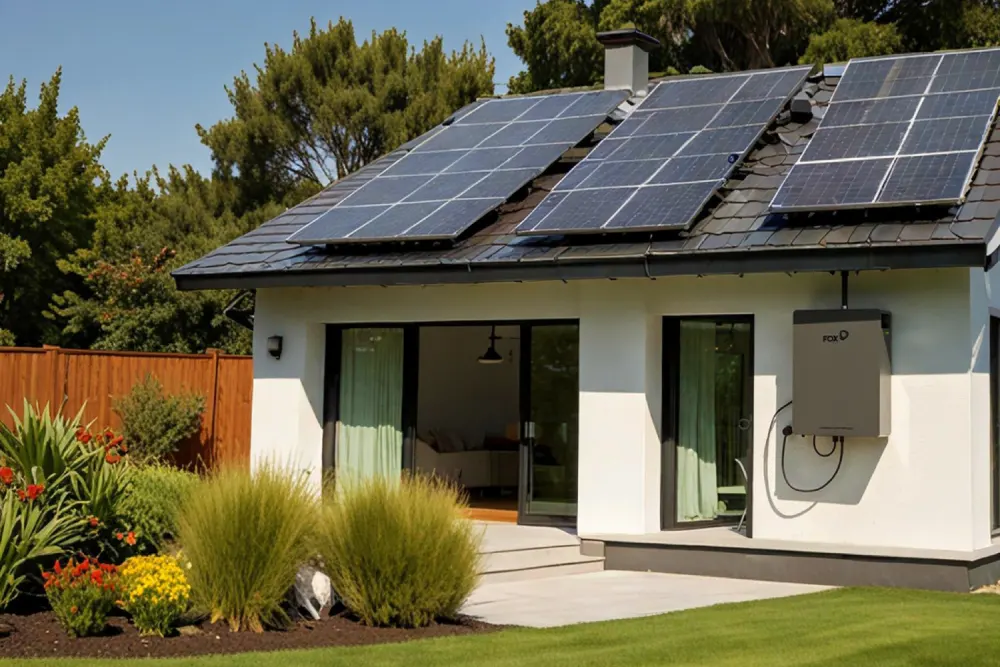
A solar and battery system is designed to generate and store electricity over many years, but performance can change for a variety of reasons. If your household has high electricity demand, even a relatively small reduction in solar generation or battery performance can become noticeable.
You might see lower-than-expected generation, a battery that is not charging properly, unusual monitoring readings or greater reliance on grid electricity. The important first step is to identify what has actually changed before assuming that a component needs replacing.
For homeowners in Worthing, finding the right solar and battery repair company means looking beyond a quick diagnosis or the cheapest repair estimate. The company should be able to investigate the complete system, identify potential causes and explain what work is genuinely required.
What Counts as Solar System Underperformance?
Underperformance does not always mean the panels themselves are faulty.
A system can appear to be producing less electricity because of several different issues, including:
- Changes in weather and seasonal sunlight
- New or increased household electricity demand
- Shading from trees or nearby structures
- Monitoring problems
- Inverter faults
- Battery charging issues
- Electrical faults
- Communication problems between components
- Equipment degradation
- Changes to system settings
This is why comparing today’s generation with a single day from the previous year can be misleading.
A better starting point is to look for a consistent change in performance and establish whether the issue affects solar generation, battery storage, electricity consumption or monitoring.
If your system appears to be underperforming, record what you are seeing before arranging repairs. Screenshots from your monitoring app, recent generation figures and error messages can help an engineer investigate more efficiently.
How Can You Tell Whether Solar Panels Are Producing Less?
Solar generation naturally varies throughout the year.
A cloudy winter day should not be compared directly with a clear summer day. Likewise, a high-use household may simply be consuming more electricity without the solar system generating less.
Useful signs to investigate include:
- Generation consistently lower than expected
- A sudden change from previous performance
- Inverter warning lights or error codes
- Monitoring showing missing data
- One part of the system behaving differently from the rest
- Unexpectedly high grid electricity use
- Noticeable changes in battery charging or discharging
If the system has monitoring software, check longer-term data rather than relying on one day’s figures.
Could Higher Household Demand Make a Working System Look Faulty?
Yes.
This is particularly important for high-energy homes.
Suppose you recently started charging an EV more frequently or added a heat pump. Your electricity consumption may have increased significantly even though the solar system is operating normally.
The result could be:
Solar generation remains similar + household demand increases = more electricity purchased from the grid
That can make it appear as though solar performance has deteriorated when the underlying issue is actually increased consumption.
Before arranging a repair, consider whether anything has changed in the way your home uses electricity.
When Should You Contact a Solar and Battery Repair Company?
A solar and battery repair company can investigate issues that go beyond normal seasonal variation.
Contact an appropriately qualified installer or repair specialist if you notice:
- Persistent inverter faults
- Battery error messages
- Unexpected shutdowns
- Battery failing to charge
- Battery discharging unusually quickly
- Solar generation falling without an obvious explanation
- Monitoring repeatedly disconnecting
- Electrical warning signs
- Equipment displaying fault codes
Do not attempt to open or repair electrical equipment yourself.
Solar installations can contain live electrical components, and batteries require particular care. Diagnosis and repair should be carried out by appropriately qualified professionals.
What Should a Proper Solar and Battery Diagnosis Include?
A useful diagnosis should begin with the symptoms and then work through the system methodically.
An engineer may need to assess:
Solar panels
The panels, connections and physical condition can be checked for visible issues or performance concerns.
Inverter
The inverter converts the electricity generated by the panels into a form that can be used by the property. Faults or error codes can affect system operation.
Battery
The battery’s state of charge, charging behaviour, discharge behaviour and system communications may need investigation.
Electrical connections
Connections, protective equipment and other electrical components may need to be assessed depending on the reported problem.
Monitoring
A monitoring issue does not necessarily mean the solar system itself has stopped generating. Communication problems can sometimes affect what appears in an app or portal.
The exact diagnostic process will depend on the equipment and symptoms.
Can You Estimate the Cost of Solar and Battery Repairs?
The cost of solar and battery repair worthing can vary significantly because there is no single type of repair.
The final cost may depend on:
- The type of fault
- Which component is affected
- Whether replacement parts are required
- Equipment age
- Accessibility
- Additional electrical work
- Diagnostic time
- Manufacturer warranty status
- Whether more than one component is involved
A simple monitoring problem may require a very different solution from an inverter or battery fault.
This is why an engineer should diagnose the issue before you assume a particular component needs replacing.
Should You Repair or Replace a Faulty Component?
Not every fault requires a complete replacement.
Depending on the equipment, age and manufacturer’s support arrangements, an installer may determine that:
- A setting needs correcting
- Monitoring needs reconnecting
- A cable or connection requires attention
- A component can be repaired
- A replacement part is available
- A larger component needs replacement
- The existing equipment is approaching the end of its useful service life
Ask for the reasoning behind any recommended replacement.
If a complete inverter or battery replacement is proposed, ask whether the original equipment is still supported, whether replacement parts are available and whether the fault is covered by a warranty.
Before approving significant repair work, ask for a clear explanation of the fault, the proposed solution and whether any manufacturer or workmanship warranty may apply.
What If Your Battery Is the Problem?
Battery problems can present in several ways.
You might notice that the battery:
- Is not charging from solar
- Does not discharge as expected
- Reaches full charge unusually quickly
- Runs out sooner than expected
- Shows an error message
- Appears offline
- Behaves differently after a software or system update
The first step is to establish whether the issue is actually with the battery.
The inverter, communications system, settings or wider electrical installation can sometimes affect battery operation.
This is another reason to use a technician who understands the complete solar and battery system rather than focusing on one component without investigation.
How Should You Choose a Repair Specialist?
If you are searching for the best battery installer worthing, avoid relying on a single marketing claim.
Instead, compare practical evidence about the company’s ability to work with your particular system.
Ask:
- Does the company work with your battery manufacturer?
- Can it diagnose inverter and solar faults as well as battery problems?
- Is it appropriately qualified for the work?
- Can it access replacement parts?
- Does it provide written findings?
- Can it explain the repair before starting?
- Does it check whether warranties apply?
- Can it support the system after the repair?
A company that understands the complete installation may be better placed to investigate an issue where several components could be involved.
What Information Should You Give the Repair Company?
Before arranging an appointment, gather as much useful information as possible.
Provide:
- Panel manufacturer and model, if known
- Inverter manufacturer and model
- Battery manufacturer and model
- Installation date
- Recent generation figures
- Recent battery performance
- Error codes
- Monitoring screenshots
- Details of any recent electrical changes
- A description of when the problem started
If you have installation documents or previous service records, keep them available.
This information can help the engineer understand the system before arriving and may reduce unnecessary diagnostic work.
How Can You Compare Repair Quotes?
If you receive more than one proposal, compare what each company is actually offering.
| Comparison point | What to check |
|---|---|
| Diagnosis | Has the underlying fault been identified? |
| Labour | Is diagnostic and repair labour included? |
| Parts | Are replacement components listed? |
| Warranty | Is existing manufacturer cover being considered? |
| Compatibility | Are replacement components compatible? |
| Testing | Will the system be tested after repair? |
| Documentation | Will you receive details of the work completed? |
| Future support | Is further servicing available? |
| Total price | Is VAT and other relevant work included? |
Be cautious about comparing headline repair prices without checking the scope.
A lower quote may exclude diagnosis, parts or additional electrical work that another quotation includes.
When Is Repair No Longer the Most Practical Option?
Sometimes an older system may be difficult or expensive to repair.
This could happen when:
- Replacement parts are no longer readily available
- Multiple components are failing
- Equipment is outside manufacturer support
- The system has reached the end of its expected service life
- A replacement is more practical than repeated repairs
That does not mean replacement is automatically the right answer.
Ask the installer to explain the available options and why replacement has been recommended. You can then compare the likely repair cost with the cost and benefits of upgrading the relevant equipment.
Related articles

What type of property do you have?

Detached House

Semi Detached House

Terraced House

Flat or Apartment
Bungalow
At a glance
A solar and battery system is designed to generate and store electricity over many years, but performance can change for a variety of reasons. If your household has high electricity demand, even a relatively small reduction in solar generation or battery performance can become noticeable.
You might see lower-than-expected generation, a battery that is not charging properly, unusual monitoring readings or greater reliance on grid electricity. The important first step is to identify what has actually changed before assuming that a component needs replacing.
For homeowners in Worthing, finding the right solar and battery repair company means looking beyond a quick diagnosis or the cheapest repair estimate. The company should be able to investigate the complete system, identify potential causes and explain what work is genuinely required.
What Counts as Solar System Underperformance?
Underperformance does not always mean the panels themselves are faulty.
A system can appear to be producing less electricity because of several different issues, including:
- Changes in weather and seasonal sunlight
- New or increased household electricity demand
- Shading from trees or nearby structures
- Monitoring problems
- Inverter faults
- Battery charging issues
- Electrical faults
- Communication problems between components
- Equipment degradation
- Changes to system settings
This is why comparing today’s generation with a single day from the previous year can be misleading.
A better starting point is to look for a consistent change in performance and establish whether the issue affects solar generation, battery storage, electricity consumption or monitoring.
If your system appears to be underperforming, record what you are seeing before arranging repairs. Screenshots from your monitoring app, recent generation figures and error messages can help an engineer investigate more efficiently.
How Can You Tell Whether Solar Panels Are Producing Less?
Solar generation naturally varies throughout the year.
A cloudy winter day should not be compared directly with a clear summer day. Likewise, a high-use household may simply be consuming more electricity without the solar system generating less.
Useful signs to investigate include:
- Generation consistently lower than expected
- A sudden change from previous performance
- Inverter warning lights or error codes
- Monitoring showing missing data
- One part of the system behaving differently from the rest
- Unexpectedly high grid electricity use
- Noticeable changes in battery charging or discharging
If the system has monitoring software, check longer-term data rather than relying on one day’s figures.
Could Higher Household Demand Make a Working System Look Faulty?
Yes.
This is particularly important for high-energy homes.
Suppose you recently started charging an EV more frequently or added a heat pump. Your electricity consumption may have increased significantly even though the solar system is operating normally.
The result could be:
Solar generation remains similar + household demand increases = more electricity purchased from the grid
That can make it appear as though solar performance has deteriorated when the underlying issue is actually increased consumption.
Before arranging a repair, consider whether anything has changed in the way your home uses electricity.
When Should You Contact a Solar and Battery Repair Company?
A solar and battery repair company can investigate issues that go beyond normal seasonal variation.
Contact an appropriately qualified installer or repair specialist if you notice:
- Persistent inverter faults
- Battery error messages
- Unexpected shutdowns
- Battery failing to charge
- Battery discharging unusually quickly
- Solar generation falling without an obvious explanation
- Monitoring repeatedly disconnecting
- Electrical warning signs
- Equipment displaying fault codes
Do not attempt to open or repair electrical equipment yourself.
Solar installations can contain live electrical components, and batteries require particular care. Diagnosis and repair should be carried out by appropriately qualified professionals.
What Should a Proper Solar and Battery Diagnosis Include?
A useful diagnosis should begin with the symptoms and then work through the system methodically.
An engineer may need to assess:
Solar panels
The panels, connections and physical condition can be checked for visible issues or performance concerns.
Inverter
The inverter converts the electricity generated by the panels into a form that can be used by the property. Faults or error codes can affect system operation.
Battery
The battery’s state of charge, charging behaviour, discharge behaviour and system communications may need investigation.
Electrical connections
Connections, protective equipment and other electrical components may need to be assessed depending on the reported problem.
Monitoring
A monitoring issue does not necessarily mean the solar system itself has stopped generating. Communication problems can sometimes affect what appears in an app or portal.
The exact diagnostic process will depend on the equipment and symptoms.
Can You Estimate the Cost of Solar and Battery Repairs?
The cost of solar and battery repair worthing can vary significantly because there is no single type of repair.
The final cost may depend on:
- The type of fault
- Which component is affected
- Whether replacement parts are required
- Equipment age
- Accessibility
- Additional electrical work
- Diagnostic time
- Manufacturer warranty status
- Whether more than one component is involved
A simple monitoring problem may require a very different solution from an inverter or battery fault.
This is why an engineer should diagnose the issue before you assume a particular component needs replacing.
Should You Repair or Replace a Faulty Component?
Not every fault requires a complete replacement.
Depending on the equipment, age and manufacturer’s support arrangements, an installer may determine that:
- A setting needs correcting
- Monitoring needs reconnecting
- A cable or connection requires attention
- A component can be repaired
- A replacement part is available
- A larger component needs replacement
- The existing equipment is approaching the end of its useful service life
Ask for the reasoning behind any recommended replacement.
If a complete inverter or battery replacement is proposed, ask whether the original equipment is still supported, whether replacement parts are available and whether the fault is covered by a warranty.
Before approving significant repair work, ask for a clear explanation of the fault, the proposed solution and whether any manufacturer or workmanship warranty may apply.
What If Your Battery Is the Problem?
Battery problems can present in several ways.
You might notice that the battery:
- Is not charging from solar
- Does not discharge as expected
- Reaches full charge unusually quickly
- Runs out sooner than expected
- Shows an error message
- Appears offline
- Behaves differently after a software or system update
The first step is to establish whether the issue is actually with the battery.
The inverter, communications system, settings or wider electrical installation can sometimes affect battery operation.
This is another reason to use a technician who understands the complete solar and battery system rather than focusing on one component without investigation.
How Should You Choose a Repair Specialist?
If you are searching for the best battery installer worthing, avoid relying on a single marketing claim.
Instead, compare practical evidence about the company’s ability to work with your particular system.
Ask:
- Does the company work with your battery manufacturer?
- Can it diagnose inverter and solar faults as well as battery problems?
- Is it appropriately qualified for the work?
- Can it access replacement parts?
- Does it provide written findings?
- Can it explain the repair before starting?
- Does it check whether warranties apply?
- Can it support the system after the repair?
A company that understands the complete installation may be better placed to investigate an issue where several components could be involved.
What Information Should You Give the Repair Company?
Before arranging an appointment, gather as much useful information as possible.
Provide:
- Panel manufacturer and model, if known
- Inverter manufacturer and model
- Battery manufacturer and model
- Installation date
- Recent generation figures
- Recent battery performance
- Error codes
- Monitoring screenshots
- Details of any recent electrical changes
- A description of when the problem started
If you have installation documents or previous service records, keep them available.
This information can help the engineer understand the system before arriving and may reduce unnecessary diagnostic work.
How Can You Compare Repair Quotes?
If you receive more than one proposal, compare what each company is actually offering.
| Comparison point | What to check |
|---|---|
| Diagnosis | Has the underlying fault been identified? |
| Labour | Is diagnostic and repair labour included? |
| Parts | Are replacement components listed? |
| Warranty | Is existing manufacturer cover being considered? |
| Compatibility | Are replacement components compatible? |
| Testing | Will the system be tested after repair? |
| Documentation | Will you receive details of the work completed? |
| Future support | Is further servicing available? |
| Total price | Is VAT and other relevant work included? |
Be cautious about comparing headline repair prices without checking the scope.
A lower quote may exclude diagnosis, parts or additional electrical work that another quotation includes.
When Is Repair No Longer the Most Practical Option?
Sometimes an older system may be difficult or expensive to repair.
This could happen when:
- Replacement parts are no longer readily available
- Multiple components are failing
- Equipment is outside manufacturer support
- The system has reached the end of its expected service life
- A replacement is more practical than repeated repairs
That does not mean replacement is automatically the right answer.
Ask the installer to explain the available options and why replacement has been recommended. You can then compare the likely repair cost with the cost and benefits of upgrading the relevant equipment.
Related articles

What type of property do you have?
Detached House
Semi Detached House
Terraced House
Flat or Apartment
Bungalow