How Long Does Solar Take to Pay for Itself in Worthing?
Investing in solar panels is no longer just about sustainability….

Why you can trust our content
We know that the solar industry is full of misinformation, but we only use reliable sources, including:




At a glance
Investing in solar panels is no longer just about sustainability. For many homeowners in Worthing, it is a practical financial decision. With energy prices remaining unpredictable, understanding how quickly solar pays for itself is often the key factor before moving forward.
The short answer is that most systems pay back within 6 to 10 years. However, the exact timeframe depends on several factors, including system size, usage habits, and installation costs. This guide breaks down everything you need to know to make an informed decision.
What Does “Payback Period” Actually Mean?
The payback period refers to how long it takes for your energy savings to equal the initial cost of installing solar panels. After this point, the electricity your system generates is effectively free, aside from minimal maintenance.
For example, if your system costs £7,000 and saves you £1,000 per year, your payback period would be around 7 years.
This is why understanding the average cost of solar worthing is essential when estimating your return.
How Much Do Solar Panels Cost in Worthing?
Costs can vary depending on the size of your property and the system installed. A typical residential setup in Worthing generally falls within the following range:
| System Size | Typical Cost | Annual Savings | Estimated Payback |
| 3kW | £5,000 – £6,000 | £600 – £800 | 7 – 9 years |
| 4kW | £6,000 – £8,000 | £800 – £1,100 | 6 – 8 years |
| 5kW | £7,500 – £9,500 | £1,000 – £1,300 | 6 – 9 years |
These figures are based on the average cost of solar worthing, combined with typical household energy usage.
What Factors Affect Solar Payback Time?
No two homes are exactly the same, which means your return on investment can vary. Several key factors influence how quickly your system pays for itself.
1. Energy Usage
Homes that use more electricity during the day benefit the most from solar, as they rely less on the grid.
2. Roof Orientation and Shade
South-facing roofs with minimal shading generate the highest output, reducing payback time.
3. System Size
Larger systems produce more electricity but come with higher upfront costs. The balance between cost and output is important.
4. Electricity Prices
Higher grid electricity prices increase your savings, meaning faster payback.
5. Export Tariffs
Selling unused electricity back to the grid can contribute to your return.
Is Solar Still Worth It Without Perfect Conditions?
Yes, in most cases it is still worthwhile. Even homes with east or west-facing roofs can achieve strong returns, although the payback period may extend slightly.
A well-designed system ensures you maximise the energy you can generate based on your property. This is where professional system design becomes crucial.

What type of property do you have?

Detached House

Semi Detached House
Terraced House

Flat or Apartment
Bungalow
It just takes 2 minutes
And then you can book a free consultation
How Much Can You Actually Save Each Year?
Savings depend on how much solar energy you use directly versus exporting it. On average, households in Worthing can expect:
Over time, these savings accumulate significantly, often exceeding the original installation cost by a wide margin.
What Happens After the Payback Period?
Once your system has paid for itself, the financial benefits continue.
Most solar panels last 25 years or more, meaning you could enjoy 15 to 20 years of low-cost electricity after breaking even.
This long-term gain is why many homeowners look beyond just the initial investment and consider lifetime value.
A Typical Worthing Installation Example
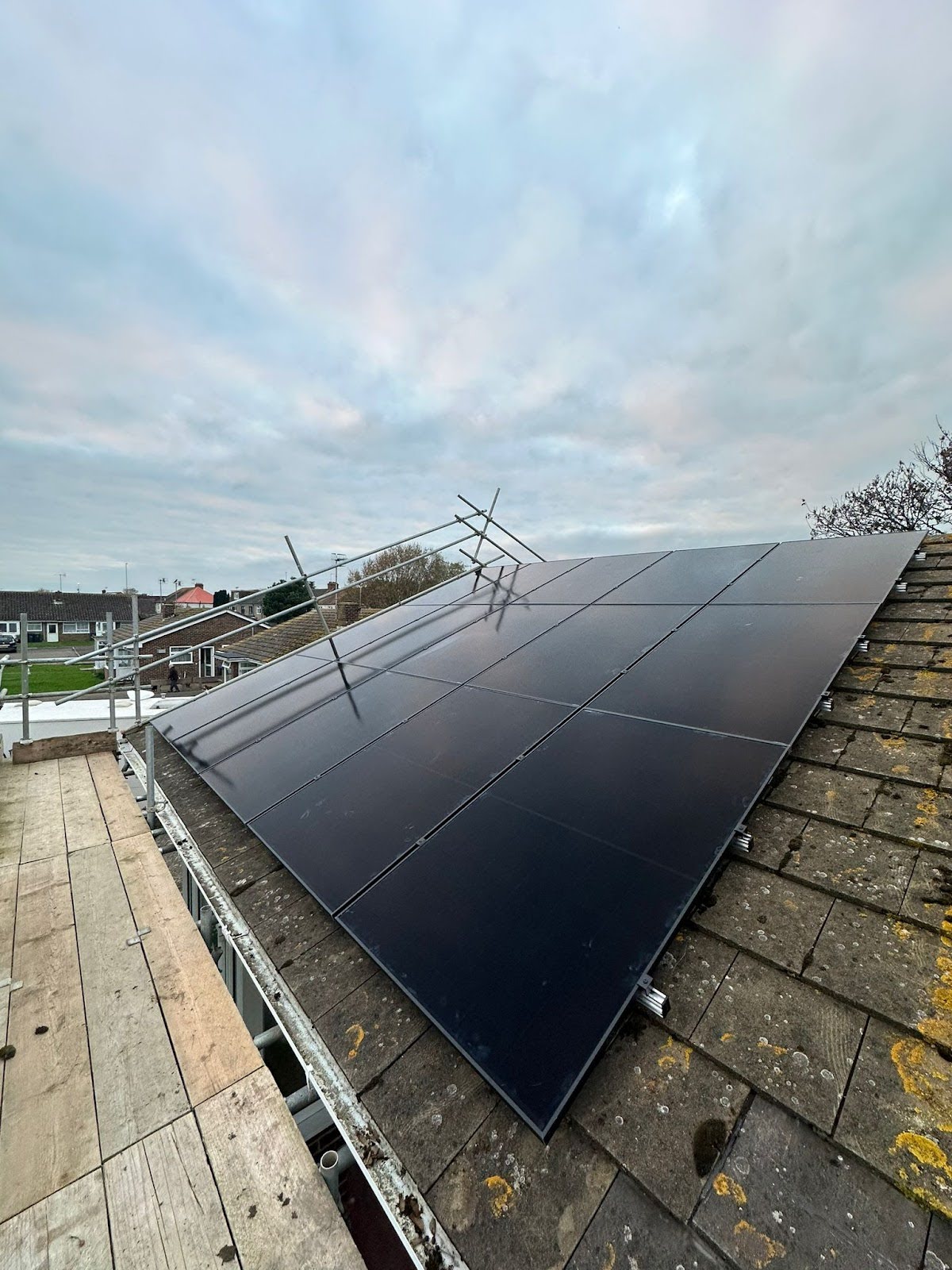
Consider a semi-detached home in Worthing with a 4kW system installed for £7,000.
Even when factoring in slight maintenance costs, the overall return is substantial. This example closely reflects the average cost of solar worthing and real-world performance.
Should You Add a Battery to Reduce Payback Time?
Adding a battery allows you to store unused electricity and use it later, rather than exporting it.
While batteries increase upfront costs, they can improve long-term savings by increasing self-consumption.
However, they may slightly extend the initial payback period due to the higher investment. The decision depends on your goals:
How Can You Maximise Your Solar ROI?
To achieve the best return on your system, consider the following:
A well-planned installation can reduce your payback period by several years.
Solar panels are a long-term investment that combines environmental benefits with strong financial returns. While the upfront cost may seem significant, the savings over time can make it one of the most cost-effective home improvements available.
For homeowners in Worthing and across West Sussex, understanding your specific payback period is the key to making a confident decision. With the right system design and installation, solar can deliver reliable savings for decades.
Related articles
What type of property do you have?
Detached House
Semi Detached House
Terraced House
Flat or Apartment
Bungalow
At a glance
Investing in solar panels is no longer just about sustainability. For many homeowners in Worthing, it is a practical financial decision. With energy prices remaining unpredictable, understanding how quickly solar pays for itself is often the key factor before moving forward.
The short answer is that most systems pay back within 6 to 10 years. However, the exact timeframe depends on several factors, including system size, usage habits, and installation costs. This guide breaks down everything you need to know to make an informed decision.
What Does “Payback Period” Actually Mean?
The payback period refers to how long it takes for your energy savings to equal the initial cost of installing solar panels. After this point, the electricity your system generates is effectively free, aside from minimal maintenance.
For example, if your system costs £7,000 and saves you £1,000 per year, your payback period would be around 7 years.
This is why understanding the average cost of solar worthing is essential when estimating your return.
How Much Do Solar Panels Cost in Worthing?
Costs can vary depending on the size of your property and the system installed. A typical residential setup in Worthing generally falls within the following range:
| System Size | Typical Cost | Annual Savings | Estimated Payback |
| 3kW | £5,000 – £6,000 | £600 – £800 | 7 – 9 years |
| 4kW | £6,000 – £8,000 | £800 – £1,100 | 6 – 8 years |
| 5kW | £7,500 – £9,500 | £1,000 – £1,300 | 6 – 9 years |
These figures are based on the average cost of solar worthing, combined with typical household energy usage.
What Factors Affect Solar Payback Time?
No two homes are exactly the same, which means your return on investment can vary. Several key factors influence how quickly your system pays for itself.
1. Energy Usage
Homes that use more electricity during the day benefit the most from solar, as they rely less on the grid.
2. Roof Orientation and Shade
South-facing roofs with minimal shading generate the highest output, reducing payback time.
3. System Size
Larger systems produce more electricity but come with higher upfront costs. The balance between cost and output is important.
4. Electricity Prices
Higher grid electricity prices increase your savings, meaning faster payback.
5. Export Tariffs
Selling unused electricity back to the grid can contribute to your return.
Is Solar Still Worth It Without Perfect Conditions?
Yes, in most cases it is still worthwhile. Even homes with east or west-facing roofs can achieve strong returns, although the payback period may extend slightly.
A well-designed system ensures you maximise the energy you can generate based on your property. This is where professional system design becomes crucial.
What type of property do you have?
Detached House
Semi Detached House
Terraced House
Flat or Apartment
Bungalow
It just takes 2 minutes
And then you can book a free consultation
How Much Can You Actually Save Each Year?
Savings depend on how much solar energy you use directly versus exporting it. On average, households in Worthing can expect:
Over time, these savings accumulate significantly, often exceeding the original installation cost by a wide margin.
What Happens After the Payback Period?
Once your system has paid for itself, the financial benefits continue.
Most solar panels last 25 years or more, meaning you could enjoy 15 to 20 years of low-cost electricity after breaking even.
This long-term gain is why many homeowners look beyond just the initial investment and consider lifetime value.
A Typical Worthing Installation Example
Consider a semi-detached home in Worthing with a 4kW system installed for £7,000.
Even when factoring in slight maintenance costs, the overall return is substantial. This example closely reflects the average cost of solar worthing and real-world performance.
Should You Add a Battery to Reduce Payback Time?
Adding a battery allows you to store unused electricity and use it later, rather than exporting it.
While batteries increase upfront costs, they can improve long-term savings by increasing self-consumption.
However, they may slightly extend the initial payback period due to the higher investment. The decision depends on your goals:
How Can You Maximise Your Solar ROI?
To achieve the best return on your system, consider the following:
A well-planned installation can reduce your payback period by several years.
Solar panels are a long-term investment that combines environmental benefits with strong financial returns. While the upfront cost may seem significant, the savings over time can make it one of the most cost-effective home improvements available.
For homeowners in Worthing and across West Sussex, understanding your specific payback period is the key to making a confident decision. With the right system design and installation, solar can deliver reliable savings for decades.
Related articles
What type of property do you have?
Detached House
Semi Detached House
Terraced House
Flat or Apartment
Bungalow