
Daytime Generation vs Evening Demand: Planning a Better Battery Setup
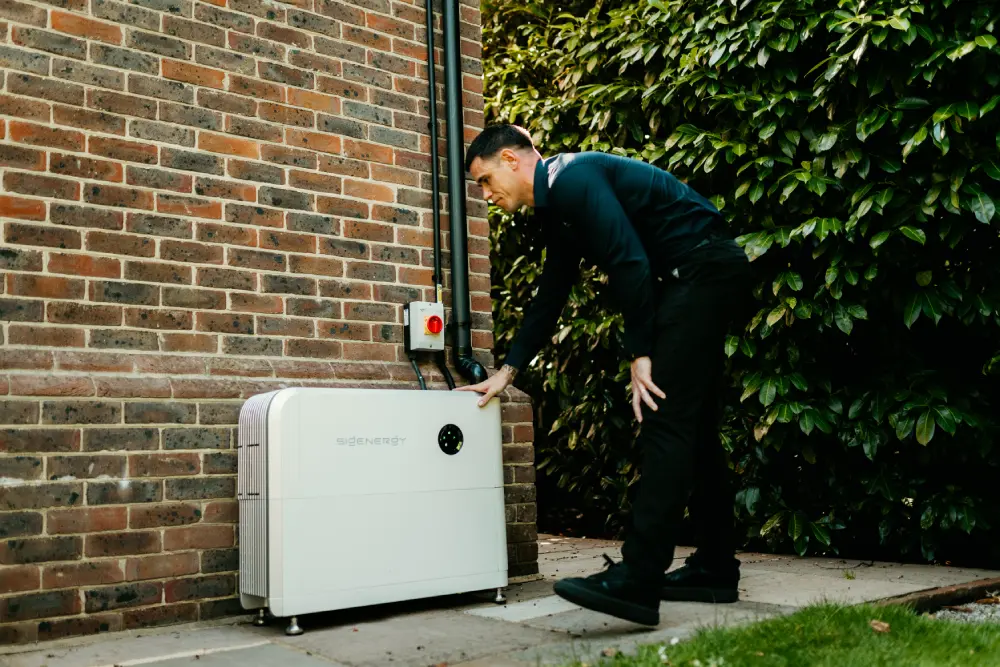
Solar battery storage can help households make better use of the electricity generated by their solar panels by storing surplus energy for use later in the day. Choosing the right battery, however, depends on factors such as your solar generation, household energy use, evening demand and electricity tariff.

Why you can trust our content
We know that the solar industry is full of misinformation, but we only use reliable sources, including:




At a glance
Solar panels can generate useful amounts of electricity during the day, but many households need more energy once the sun has gone down. That timing difference is one of the main reasons battery storage is considered alongside solar.
A battery can store some electricity generated during daylight and make it available later. However, choosing the right battery is not simply a matter of selecting the largest capacity available. The relationship between solar generation, household demand, battery capacity and electricity tariffs all need to be considered.
For homeowners comparing options for a battery installer worthing, understanding this relationship can make it easier to ask the right questions and assess whether a proposed system actually suits the property.
Why Is There a Difference Between Solar Generation and Household Demand?
Solar generation and household electricity demand rarely follow exactly the same pattern.
Solar output normally increases after sunrise, reaches its strongest levels around the middle of the day and then falls towards the evening. Household demand can behave quite differently.
A typical home might use relatively little electricity while occupants are away during the daytime. Demand can then increase later when people return home, cook meals, use appliances, watch television and charge devices.
This creates a potential mismatch:
- Daytime: Solar generation may exceed household demand.
- Late afternoon: Solar production begins to fall while demand increases.
- Evening: Solar generation is minimal or zero, but household demand can remain high.
- Overnight: Electricity may still be required for appliances and essential equipment.
Battery storage is designed to help manage this difference.
How Does a Home Battery Shift Electricity Into the Evening?
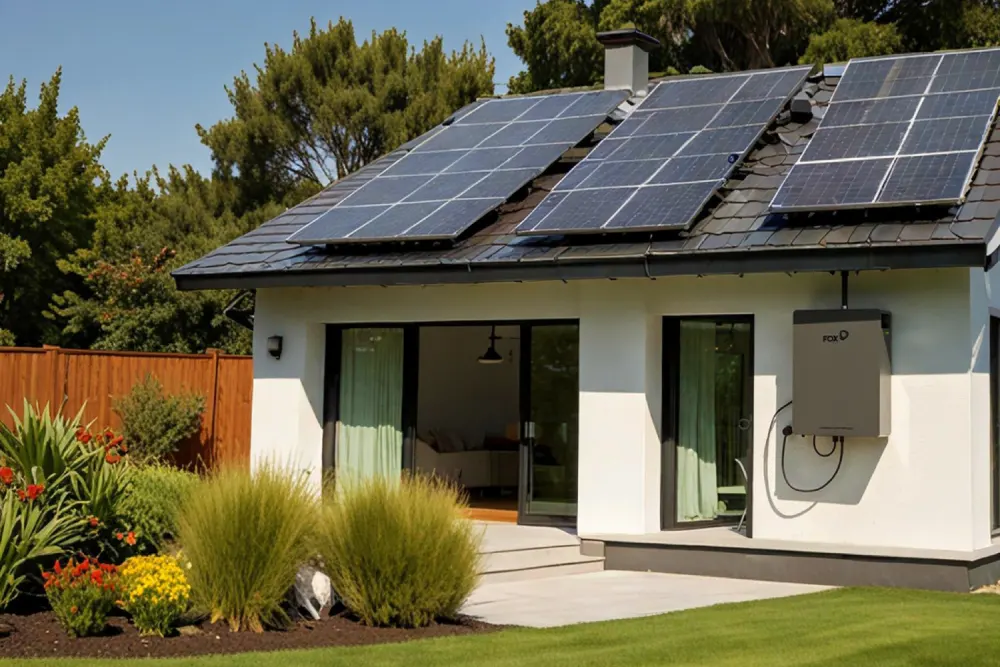
When solar panels generate more electricity than the property is using, the surplus can potentially be directed towards battery charging.
Once the battery has stored energy, it can discharge later when the panels are producing less or no electricity.
The basic process is:
- Solar panels generate electricity during daylight.
- Household appliances use electricity directly where possible.
- Surplus electricity charges the battery.
- Solar output decreases later in the day.
- The battery supplies some household demand.
- The grid can provide any additional electricity required.
This can increase the proportion of generated solar electricity that is used within the property rather than exported immediately.
However, the exact operation depends on the system controls, battery settings, inverter and tariff arrangements.
If you are considering battery storage, All Solar Works can help you understand how a battery could fit around your existing or planned solar generation. The aim should be to match storage to actual household requirements rather than simply maximise capacity.
What Should Determine Battery Size?
Battery size should be influenced by how much surplus electricity is available and how much electricity the household typically needs later in the day.
For example, suppose a household regularly produces a substantial amount of surplus solar energy between late morning and mid-afternoon. If evening consumption is also significant, there may be a useful opportunity to store some of that daytime generation.
But if the property has very little daytime surplus, a large battery may not be fully charged by solar generation on many days.
Factors worth considering include:
- Annual electricity consumption
- Typical daytime electricity demand
- Evening and overnight consumption
- Solar system size
- Roof orientation and shading
- Seasonal changes in solar generation
- Battery usable capacity
- Battery charge and discharge limits
- Future changes to household electricity use
A battery should therefore be considered as part of the wider energy system rather than as a standalone product.
Does a Bigger Battery Always Mean Better Value?
No. Bigger does not automatically mean better.
A larger battery provides more storage capacity, but it also costs more. If there is not enough surplus electricity available to charge it regularly, some of that additional capacity may rarely be used.
The opposite situation can also occur. A household with strong solar generation and substantial evening demand could potentially benefit from greater storage capacity.
The objective is to find a sensible balance between:
Available solar surplus + household demand + usable battery capacity + cost
This is why comparing battery installer worthing options based solely on advertised battery capacity can be misleading. Two systems with different capacities may be suitable for completely different homes.
How Does Seasonality Affect Battery Performance?
Solar generation changes significantly throughout the year.
During brighter periods, a solar system may generate enough surplus electricity to charge a battery regularly. During shorter, cloudier winter days, there may be much less surplus available.
This means a battery that performs very well during summer cannot necessarily be expected to operate in exactly the same way throughout winter.
Seasonal differences should be discussed before installation. A realistic assessment should consider how the system is expected to behave across the year rather than focusing only on the strongest generation days.
What Happens If the Battery Is Full?
Once a battery reaches its usable charge limit, additional solar electricity cannot be stored in it.
If the property is not using that electricity at the same time, the surplus may instead be exported to the grid, subject to the home’s arrangements.
This is not necessarily inefficient. Export can still form part of a sensible energy strategy.
The important point is to understand what the system is expected to do when:
- The battery is empty
- The battery is partly charged
- The battery reaches full capacity
- Solar production exceeds both household demand and available storage
- Household demand exceeds available solar and battery energy
A good system design should account for these different operating conditions.
How Does Evening Demand Affect Battery Use?
Evening demand is particularly relevant because solar generation is falling at the same time that household activity often increases.
For example, between 5pm and 9pm a household may use electricity for:
- Cooking
- Lighting
- Television and entertainment
- Computers
- Washing machines or dishwashers
- Hot water
- Electric vehicle charging
If the household regularly consumes significant electricity during these hours, stored solar energy may have a useful role.
However, not every appliance needs to run from the battery. High-power appliances can place greater demands on the system, and some may be better managed through other approaches.
Understanding the actual load profile helps avoid unrealistic expectations about how long a battery will last.
What Does Battery Installation Cost Depend On?
The battery installation cost worthing homeowners see can vary considerably because a battery is only one part of the installation.
The final price can depend on factors such as:
| Cost factor | Why it matters |
| Battery capacity | Larger batteries generally require more equipment |
| Battery technology | Different products have different specifications and warranties |
| Inverter requirements | Some systems need compatible or upgraded inverter equipment |
| Existing solar system | Retrofitting can involve different work from a new installation |
| Electrical work | The property’s existing setup can affect installation requirements |
| Monitoring and controls | Energy management features can affect the overall system |
| Installation complexity | Access, cable routes and existing equipment can influence labour |
Because of these variables, it is better to compare complete system proposals than to judge an installation by battery price alone.
Is Retrofitting a Battery Different From Installing One With New Solar?
Yes. Adding storage to an existing solar system can involve different design considerations from installing solar and a battery together.
An existing system may already have an inverter that was designed around the original installation. Depending on the equipment, a compatible battery and suitable control arrangement may need to be added.
A new solar installation can potentially be designed with the battery from the outset, allowing the inverter, panels and storage strategy to be considered together.
This does not mean retrofitting is unsuitable. It simply means the existing system needs to be assessed before a battery is selected.
How Can You Compare Battery Quotes Properly?
Looking only at the headline price can make it difficult to identify the best option.
When comparing proposals, look at:
- Battery usable capacity rather than headline capacity alone
- Warranty terms
- Expected system lifespan
- Inverter compatibility
- Installation work included
- Monitoring arrangements
- Whether backup power is available and under what conditions
- How the battery will be controlled
- What happens if the solar system is expanded later
- Any additional electrical work required
It is also worth asking the installer to explain why the proposed battery capacity has been chosen.
If you are comparing the battery installation cost worthing homeowners are being quoted, All Solar Works can help you look beyond the headline figure and understand what the proposed system includes.

What type of property do you have?

Detached House

Semi Detached House

Terraced House

Flat or Apartment
Bungalow
It just takes 2 minutes
And then you can book a free consultation
A Typical Evening-Use Scenario
Consider a three-bedroom home where both adults are usually away during the day. Solar generation is strongest while the property has relatively low electricity demand.
By early evening, the family returns home. Cooking begins, lighting is switched on and several appliances are used. The household therefore needs considerably more electricity after solar production has started to decline.
A suitably planned battery could store some of the surplus generated earlier and release it during the evening.
The key point is not that every home with this pattern needs a particular battery size. Instead, the example shows why the timing of generation and consumption matters when assessing storage.
What Questions Should You Ask a Battery Installer?
A professional discussion should cover more than battery capacity and price.
Useful questions include:
- How was the proposed battery size calculated?
- How much surplus solar electricity is expected?
- What proportion of my evening demand could the battery potentially cover?
- What happens during periods of low solar generation?
- Can the battery charge from the grid if appropriate?
- What are the warranty terms?
- Is the battery compatible with my existing inverter?
- What monitoring will be available?
- What maintenance is expected?
- Could the system accommodate future changes in electricity demand?
The answers should be specific to the property rather than based solely on a standard package.
Can Electricity Tariffs Change How You Use a Battery?
Yes. A battery may be used differently depending on the household’s electricity tariff.
Some tariffs have different rates at different times. Depending on the tariff and system controls, there may be circumstances where charging from the grid at a lower rate and using stored electricity later could be considered.
That does not automatically make a particular tariff or charging strategy worthwhile. The numbers need to be assessed alongside battery efficiency, available rates, household demand and system settings.
Solar generation should remain part of the overall calculation rather than treating the battery as an independent energy source.
Is Battery Storage Right for Every Solar Home?
No. Battery storage can be useful, but it is not essential for every household.
A home with high daytime electricity demand may already consume a large proportion of its solar generation directly. Another property may have low daytime use and significant evening demand, making storage more relevant.
The most sensible decision depends on the individual circumstances.
If you are unsure whether battery storage makes sense for your home, speak to the All Solar Works team. A property-specific assessment can help establish whether the potential benefits justify the additional equipment and cost.
Related articles
What type of property do you have?
Detached House
Semi Detached House
Terraced House
Flat or Apartment
Bungalow
At a glance
Solar panels can generate useful amounts of electricity during the day, but many households need more energy once the sun has gone down. That timing difference is one of the main reasons battery storage is considered alongside solar.
A battery can store some electricity generated during daylight and make it available later. However, choosing the right battery is not simply a matter of selecting the largest capacity available. The relationship between solar generation, household demand, battery capacity and electricity tariffs all need to be considered.
For homeowners comparing options for a battery installer worthing, understanding this relationship can make it easier to ask the right questions and assess whether a proposed system actually suits the property.
Why Is There a Difference Between Solar Generation and Household Demand?
Solar generation and household electricity demand rarely follow exactly the same pattern.
Solar output normally increases after sunrise, reaches its strongest levels around the middle of the day and then falls towards the evening. Household demand can behave quite differently.
A typical home might use relatively little electricity while occupants are away during the daytime. Demand can then increase later when people return home, cook meals, use appliances, watch television and charge devices.
This creates a potential mismatch:
- Daytime: Solar generation may exceed household demand.
- Late afternoon: Solar production begins to fall while demand increases.
- Evening: Solar generation is minimal or zero, but household demand can remain high.
- Overnight: Electricity may still be required for appliances and essential equipment.
Battery storage is designed to help manage this difference.
How Does a Home Battery Shift Electricity Into the Evening?
When solar panels generate more electricity than the property is using, the surplus can potentially be directed towards battery charging.
Once the battery has stored energy, it can discharge later when the panels are producing less or no electricity.
The basic process is:
- Solar panels generate electricity during daylight.
- Household appliances use electricity directly where possible.
- Surplus electricity charges the battery.
- Solar output decreases later in the day.
- The battery supplies some household demand.
- The grid can provide any additional electricity required.
This can increase the proportion of generated solar electricity that is used within the property rather than exported immediately.
However, the exact operation depends on the system controls, battery settings, inverter and tariff arrangements.
If you are considering battery storage, All Solar Works can help you understand how a battery could fit around your existing or planned solar generation. The aim should be to match storage to actual household requirements rather than simply maximise capacity.
What Should Determine Battery Size?
Battery size should be influenced by how much surplus electricity is available and how much electricity the household typically needs later in the day.
For example, suppose a household regularly produces a substantial amount of surplus solar energy between late morning and mid-afternoon. If evening consumption is also significant, there may be a useful opportunity to store some of that daytime generation.
But if the property has very little daytime surplus, a large battery may not be fully charged by solar generation on many days.
Factors worth considering include:
- Annual electricity consumption
- Typical daytime electricity demand
- Evening and overnight consumption
- Solar system size
- Roof orientation and shading
- Seasonal changes in solar generation
- Battery usable capacity
- Battery charge and discharge limits
- Future changes to household electricity use
A battery should therefore be considered as part of the wider energy system rather than as a standalone product.
Does a Bigger Battery Always Mean Better Value?
No. Bigger does not automatically mean better.
A larger battery provides more storage capacity, but it also costs more. If there is not enough surplus electricity available to charge it regularly, some of that additional capacity may rarely be used.
The opposite situation can also occur. A household with strong solar generation and substantial evening demand could potentially benefit from greater storage capacity.
The objective is to find a sensible balance between:
Available solar surplus + household demand + usable battery capacity + cost
This is why comparing battery installer worthing options based solely on advertised battery capacity can be misleading. Two systems with different capacities may be suitable for completely different homes.
How Does Seasonality Affect Battery Performance?
Solar generation changes significantly throughout the year.
During brighter periods, a solar system may generate enough surplus electricity to charge a battery regularly. During shorter, cloudier winter days, there may be much less surplus available.
This means a battery that performs very well during summer cannot necessarily be expected to operate in exactly the same way throughout winter.
Seasonal differences should be discussed before installation. A realistic assessment should consider how the system is expected to behave across the year rather than focusing only on the strongest generation days.
What Happens If the Battery Is Full?
Once a battery reaches its usable charge limit, additional solar electricity cannot be stored in it.
If the property is not using that electricity at the same time, the surplus may instead be exported to the grid, subject to the home’s arrangements.
This is not necessarily inefficient. Export can still form part of a sensible energy strategy.
The important point is to understand what the system is expected to do when:
- The battery is empty
- The battery is partly charged
- The battery reaches full capacity
- Solar production exceeds both household demand and available storage
- Household demand exceeds available solar and battery energy
A good system design should account for these different operating conditions.
How Does Evening Demand Affect Battery Use?
Evening demand is particularly relevant because solar generation is falling at the same time that household activity often increases.
For example, between 5pm and 9pm a household may use electricity for:
- Cooking
- Lighting
- Television and entertainment
- Computers
- Washing machines or dishwashers
- Hot water
- Electric vehicle charging
If the household regularly consumes significant electricity during these hours, stored solar energy may have a useful role.
However, not every appliance needs to run from the battery. High-power appliances can place greater demands on the system, and some may be better managed through other approaches.
Understanding the actual load profile helps avoid unrealistic expectations about how long a battery will last.
What Does Battery Installation Cost Depend On?
The battery installation cost worthing homeowners see can vary considerably because a battery is only one part of the installation.
The final price can depend on factors such as:
| Cost factor | Why it matters |
| Battery capacity | Larger batteries generally require more equipment |
| Battery technology | Different products have different specifications and warranties |
| Inverter requirements | Some systems need compatible or upgraded inverter equipment |
| Existing solar system | Retrofitting can involve different work from a new installation |
| Electrical work | The property’s existing setup can affect installation requirements |
| Monitoring and controls | Energy management features can affect the overall system |
| Installation complexity | Access, cable routes and existing equipment can influence labour |
Because of these variables, it is better to compare complete system proposals than to judge an installation by battery price alone.
Is Retrofitting a Battery Different From Installing One With New Solar?
Yes. Adding storage to an existing solar system can involve different design considerations from installing solar and a battery together.
An existing system may already have an inverter that was designed around the original installation. Depending on the equipment, a compatible battery and suitable control arrangement may need to be added.
A new solar installation can potentially be designed with the battery from the outset, allowing the inverter, panels and storage strategy to be considered together.
This does not mean retrofitting is unsuitable. It simply means the existing system needs to be assessed before a battery is selected.
How Can You Compare Battery Quotes Properly?
Looking only at the headline price can make it difficult to identify the best option.
When comparing proposals, look at:
- Battery usable capacity rather than headline capacity alone
- Warranty terms
- Expected system lifespan
- Inverter compatibility
- Installation work included
- Monitoring arrangements
- Whether backup power is available and under what conditions
- How the battery will be controlled
- What happens if the solar system is expanded later
- Any additional electrical work required
It is also worth asking the installer to explain why the proposed battery capacity has been chosen.
If you are comparing the battery installation cost worthing homeowners are being quoted, All Solar Works can help you look beyond the headline figure and understand what the proposed system includes.
What type of property do you have?
Detached House
Semi Detached House
Terraced House
Flat or Apartment
Bungalow
It just takes 2 minutes
And then you can book a free consultation
A Typical Evening-Use Scenario
Consider a three-bedroom home where both adults are usually away during the day. Solar generation is strongest while the property has relatively low electricity demand.
By early evening, the family returns home. Cooking begins, lighting is switched on and several appliances are used. The household therefore needs considerably more electricity after solar production has started to decline.
A suitably planned battery could store some of the surplus generated earlier and release it during the evening.
The key point is not that every home with this pattern needs a particular battery size. Instead, the example shows why the timing of generation and consumption matters when assessing storage.
What Questions Should You Ask a Battery Installer?
A professional discussion should cover more than battery capacity and price.
Useful questions include:
- How was the proposed battery size calculated?
- How much surplus solar electricity is expected?
- What proportion of my evening demand could the battery potentially cover?
- What happens during periods of low solar generation?
- Can the battery charge from the grid if appropriate?
- What are the warranty terms?
- Is the battery compatible with my existing inverter?
- What monitoring will be available?
- What maintenance is expected?
- Could the system accommodate future changes in electricity demand?
The answers should be specific to the property rather than based solely on a standard package.
Can Electricity Tariffs Change How You Use a Battery?
Yes. A battery may be used differently depending on the household’s electricity tariff.
Some tariffs have different rates at different times. Depending on the tariff and system controls, there may be circumstances where charging from the grid at a lower rate and using stored electricity later could be considered.
That does not automatically make a particular tariff or charging strategy worthwhile. The numbers need to be assessed alongside battery efficiency, available rates, household demand and system settings.
Solar generation should remain part of the overall calculation rather than treating the battery as an independent energy source.
Is Battery Storage Right for Every Solar Home?
No. Battery storage can be useful, but it is not essential for every household.
A home with high daytime electricity demand may already consume a large proportion of its solar generation directly. Another property may have low daytime use and significant evening demand, making storage more relevant.
The most sensible decision depends on the individual circumstances.
If you are unsure whether battery storage makes sense for your home, speak to the All Solar Works team. A property-specific assessment can help establish whether the potential benefits justify the additional equipment and cost.
Related articles
What type of property do you have?
Detached House
Semi Detached House
Terraced House
Flat or Apartment
Bungalow