Should You Oversize Solar Now or Plan a Battery Upgrade Later?
Should you install more solar now or add battery storage later? Explore system sizing, future energy demand, costs and upgrade considerations in Worthing.

Why you can trust our content
We know that the solar industry is full of misinformation, but we only use reliable sources, including:




At a glance
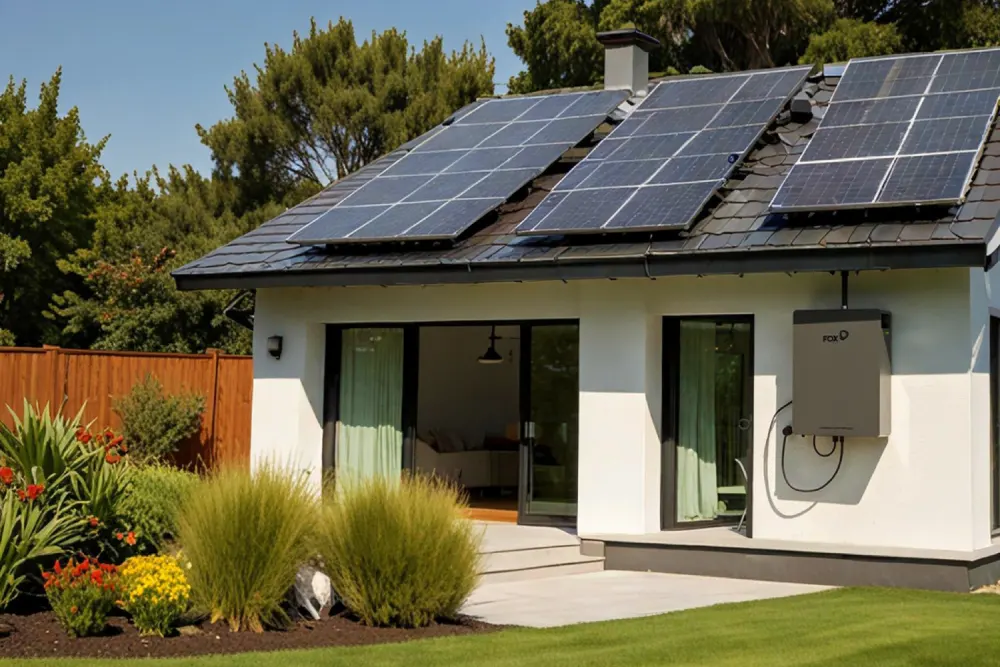
When planning a solar system for a high-energy home, there is more than one way to prepare for increasing electricity demand.
One option is to install as much suitable solar capacity as practical from the outset. Another is to install a system that meets current requirements and consider adding battery storage later. For some households, a combination of a larger solar array and storage may make sense from the beginning.
There is no universal answer because the right approach depends on the roof, electricity consumption, future plans, available budget and compatibility of the equipment selected.
For homeowners comparing solar and battery cost Worthing options, understanding the difference between these approaches can make it easier to assess what you are actually paying for and what flexibility you may have in the future.
If you are unsure whether your home would benefit from more solar capacity now or a staged approach, All Solar Works can assess your current and anticipated electricity use before discussing suitable options.
What Does “Oversizing” a Solar System Actually Mean?
Oversizing does not simply mean installing an unnecessarily large system.
In practical terms, it can mean using as much of the suitable roof area as makes sense for a household’s electricity requirements, particularly where future demand is expected to increase.
For example, a home may currently use electricity for normal household appliances but be planning to add an EV and heat pump. Installing a system based solely on today’s consumption could leave less solar generation available once those new loads are introduced.
However, there are limits.
The roof, inverter, electrical infrastructure, budget and expected generation all need to be considered. A larger array is only useful if the property can accommodate it appropriately and the additional generation has a sensible role within the overall energy plan.
Why Might You Install More Solar From the Start?
There are several reasons a homeowner might consider maximising suitable solar capacity during the initial installation.
A larger array can:
- Generate more electricity when sunlight is available
- Provide greater potential to cover future demand
- Create more surplus generation that could potentially be stored
- Reduce the need to revisit roof-mounted equipment later
- Make better use of available suitable roof space
This can be particularly relevant where a household already knows that electricity demand is likely to rise.
An EV, heat pump or additional electric heating can materially change annual consumption. If these changes are already planned, they can be included in the original system design.
Could a Smaller Solar System and Later Battery Be Better?
Sometimes.
A staged approach may suit homeowners who have limited immediate budget, want to understand their energy usage first or expect their electricity profile to change gradually.
However, a battery does not generate electricity. It stores electricity that has already been produced, either by solar or potentially from the grid depending on the system and tariff.
This distinction is important.
If the initial solar array is too small to produce meaningful surplus energy, adding a large battery later may not provide the expected benefit from solar storage.
Therefore, “solar now, battery later” should not be treated as automatically equivalent to installing both as part of the original design.
How Does Future Electricity Demand Affect the Decision?
Future demand is one of the most important considerations.
A homeowner expecting to purchase an EV may have substantially higher electricity consumption in a few years. A family planning to switch from gas heating to a heat pump may also see its electricity use change.
Consider these possible changes:
| Future change | What it could mean for system planning |
|---|---|
| EV ownership | Higher annual electricity demand and possible charging load |
| Heat pump | Additional electricity use for heating and hot water |
| Home working | Increased daytime consumption |
| Electric cooking | Greater regular electrical demand |
| Property extension | Potentially more heating and appliance loads |
| Additional occupants | Increased overall household consumption |
Not every future change requires a larger solar array. The point is to identify foreseeable changes before deciding whether to maximise capacity now or retain flexibility for later.
What About the Cost of Installing Everything at Once?
Cost is naturally part of the decision.
When researching solar and battery cost Worthing, it is worth separating the cost of solar generation from the cost of storage.
Solar panels, inverter equipment, mounting systems and installation form one part of the project. Battery storage adds additional equipment, installation and electrical integration.
Installing both at the same time may produce a different overall project cost from completing the work in separate stages.
However, future installation costs are difficult to predict. Equipment prices, labour costs, electrical requirements and technology can all change.
A staged approach should therefore be considered for its practical advantages rather than assuming that delaying part of the installation will definitely be cheaper.
All Solar Works can explain the equipment and installation included in a proposed system so you can understand the difference between installing a complete solar and battery system now and planning for a future upgrade.
Can Every Solar System Have a Battery Added Later?
No.
Compatibility is an important consideration when planning a staged installation.
Depending on the equipment used, adding battery storage later may involve additional electrical equipment or changes to the existing system. The original inverter configuration can also influence the options available.
Before choosing a system on the assumption that a battery can simply be added later, ask the installer:
- Is the proposed inverter compatible with future battery storage?
- Would a future battery require additional equipment?
- Is there suitable space for the battery?
- Will the electrical installation allow for the planned upgrade?
- Which battery systems could potentially work with the proposed setup?
- Are there any limitations to future expansion?
Getting clear answers at the start can prevent unpleasant surprises later.
Why Does the Installer’s Certification Matter?
System design and installation quality become increasingly important when several pieces of equipment need to work together.
An MCS certified battery installer can provide relevant reassurance around recognised installation standards and certification requirements where applicable. Homeowners should still check exactly what certification applies to the proposed work and equipment rather than relying on a general claim.
MCS certification can also be relevant where homeowners are looking at schemes or requirements that specifically require MCS-certified installation.
The important point is to check the installer and the scope of certification rather than assuming every battery installation follows the same process.
Should You Choose a Battery at the Same Time as Solar?
It depends on your circumstances.
Installing a battery alongside solar can provide a complete system from day one. It may be appropriate where the household has substantial evening demand and sufficient solar generation to provide useful charging opportunities.
Waiting may make sense where battery storage is not currently a priority or where household electricity use is expected to change significantly.
However, the initial solar system should ideally be designed with any realistic future battery plans in mind.
That could mean selecting compatible equipment and ensuring the installation has appropriate space and electrical provisions.
What Does “Future-Proofing” Actually Mean?
Future-proofing does not mean trying to predict every technological or lifestyle change.
It means making sensible decisions today that avoid unnecessarily restricting your options later.
For a solar installation, that could include:
- Choosing an appropriately sized inverter
- Considering future electricity demand
- Assessing whether the roof has additional usable capacity
- Checking battery compatibility
- Allowing suitable installation space
- Understanding the system’s monitoring capabilities
- Keeping records of equipment specifications
This can be more useful than simply buying the largest battery or solar array available.
A Typical Worthing Home Planning Ahead
Imagine a family property where current electricity consumption is moderate, but the owners expect to purchase an EV and install a heat pump within several years.
They could choose a modest solar system based only on current bills and revisit the entire setup later. Alternatively, they could discuss their future plans during the original design assessment.
The installer might determine that additional suitable roof capacity should be used now, while battery storage could either be included immediately or planned for a compatible future installation.
The appropriate option would depend on the property’s roof, expected generation, budget and equipment.
The important part is that future demand has been considered before the initial system is selected.
How Should You Compare Solar and Battery Proposals?
When comparing proposals, ask installers to explain the reasoning behind their system sizes.
Look at:
| Item | What to check |
|---|---|
| Solar capacity | Total kWp and proposed panel count |
| Panel specification | Manufacturer and model |
| Inverter | Capacity and future compatibility |
| Battery | Capacity and power if included |
| Roof use | Which suitable roof areas are included |
| Generation estimate | Expected annual output |
| Future expansion | What can realistically be added later |
| Warranty | Equipment and workmanship coverage |
| Installation | What electrical work is included |
| Total cost | Full installed price |
This makes discussions about solar and battery cost Worthing much more meaningful because you are comparing complete system specifications rather than headline figures.
Is the Cheapest Initial Option Always the Most Flexible?
Not necessarily.
A low initial price may reflect a smaller system, fewer components or a different equipment specification. If you later need to replace or modify equipment to accommodate battery storage, the overall project could become more complicated.
That does not mean the most extensive system is automatically appropriate.
Instead, consider what your household is likely to need and ask whether the proposed equipment leaves sensible options for future changes.
A good installer should be able to explain both the immediate solution and any relevant upgrade limitations.
When Should You Plan a Battery Upgrade?
A future battery upgrade may be worth discussing if:
- You already have solar panels
- Evening electricity demand is increasing
- You are adding an EV
- Your household is moving towards more electric heating
- You regularly export surplus solar electricity
- Your existing system is compatible with storage
If your system was not originally designed with storage in mind, an installer should assess compatibility before recommending a specific battery.
An MCS certified battery installer can also advise on the installation requirements and whether the proposed upgrade is suitable for the existing system.
Related articles

What type of property do you have?

Detached House

Semi Detached House

Terraced House

Flat or Apartment
Bungalow
At a glance
When planning a solar system for a high-energy home, there is more than one way to prepare for increasing electricity demand.
One option is to install as much suitable solar capacity as practical from the outset. Another is to install a system that meets current requirements and consider adding battery storage later. For some households, a combination of a larger solar array and storage may make sense from the beginning.
There is no universal answer because the right approach depends on the roof, electricity consumption, future plans, available budget and compatibility of the equipment selected.
For homeowners comparing solar and battery cost Worthing options, understanding the difference between these approaches can make it easier to assess what you are actually paying for and what flexibility you may have in the future.
If you are unsure whether your home would benefit from more solar capacity now or a staged approach, All Solar Works can assess your current and anticipated electricity use before discussing suitable options.
What Does “Oversizing” a Solar System Actually Mean?
Oversizing does not simply mean installing an unnecessarily large system.
In practical terms, it can mean using as much of the suitable roof area as makes sense for a household’s electricity requirements, particularly where future demand is expected to increase.
For example, a home may currently use electricity for normal household appliances but be planning to add an EV and heat pump. Installing a system based solely on today’s consumption could leave less solar generation available once those new loads are introduced.
However, there are limits.
The roof, inverter, electrical infrastructure, budget and expected generation all need to be considered. A larger array is only useful if the property can accommodate it appropriately and the additional generation has a sensible role within the overall energy plan.
Why Might You Install More Solar From the Start?
There are several reasons a homeowner might consider maximising suitable solar capacity during the initial installation.
A larger array can:
- Generate more electricity when sunlight is available
- Provide greater potential to cover future demand
- Create more surplus generation that could potentially be stored
- Reduce the need to revisit roof-mounted equipment later
- Make better use of available suitable roof space
This can be particularly relevant where a household already knows that electricity demand is likely to rise.
An EV, heat pump or additional electric heating can materially change annual consumption. If these changes are already planned, they can be included in the original system design.
Could a Smaller Solar System and Later Battery Be Better?
Sometimes.
A staged approach may suit homeowners who have limited immediate budget, want to understand their energy usage first or expect their electricity profile to change gradually.
However, a battery does not generate electricity. It stores electricity that has already been produced, either by solar or potentially from the grid depending on the system and tariff.
This distinction is important.
If the initial solar array is too small to produce meaningful surplus energy, adding a large battery later may not provide the expected benefit from solar storage.
Therefore, “solar now, battery later” should not be treated as automatically equivalent to installing both as part of the original design.
How Does Future Electricity Demand Affect the Decision?
Future demand is one of the most important considerations.
A homeowner expecting to purchase an EV may have substantially higher electricity consumption in a few years. A family planning to switch from gas heating to a heat pump may also see its electricity use change.
Consider these possible changes:
| Future change | What it could mean for system planning |
|---|---|
| EV ownership | Higher annual electricity demand and possible charging load |
| Heat pump | Additional electricity use for heating and hot water |
| Home working | Increased daytime consumption |
| Electric cooking | Greater regular electrical demand |
| Property extension | Potentially more heating and appliance loads |
| Additional occupants | Increased overall household consumption |
Not every future change requires a larger solar array. The point is to identify foreseeable changes before deciding whether to maximise capacity now or retain flexibility for later.
What About the Cost of Installing Everything at Once?
Cost is naturally part of the decision.
When researching solar and battery cost Worthing, it is worth separating the cost of solar generation from the cost of storage.
Solar panels, inverter equipment, mounting systems and installation form one part of the project. Battery storage adds additional equipment, installation and electrical integration.
Installing both at the same time may produce a different overall project cost from completing the work in separate stages.
However, future installation costs are difficult to predict. Equipment prices, labour costs, electrical requirements and technology can all change.
A staged approach should therefore be considered for its practical advantages rather than assuming that delaying part of the installation will definitely be cheaper.
All Solar Works can explain the equipment and installation included in a proposed system so you can understand the difference between installing a complete solar and battery system now and planning for a future upgrade.
Can Every Solar System Have a Battery Added Later?
No.
Compatibility is an important consideration when planning a staged installation.
Depending on the equipment used, adding battery storage later may involve additional electrical equipment or changes to the existing system. The original inverter configuration can also influence the options available.
Before choosing a system on the assumption that a battery can simply be added later, ask the installer:
- Is the proposed inverter compatible with future battery storage?
- Would a future battery require additional equipment?
- Is there suitable space for the battery?
- Will the electrical installation allow for the planned upgrade?
- Which battery systems could potentially work with the proposed setup?
- Are there any limitations to future expansion?
Getting clear answers at the start can prevent unpleasant surprises later.
Why Does the Installer’s Certification Matter?
System design and installation quality become increasingly important when several pieces of equipment need to work together.
An MCS certified battery installer can provide relevant reassurance around recognised installation standards and certification requirements where applicable. Homeowners should still check exactly what certification applies to the proposed work and equipment rather than relying on a general claim.
MCS certification can also be relevant where homeowners are looking at schemes or requirements that specifically require MCS-certified installation.
The important point is to check the installer and the scope of certification rather than assuming every battery installation follows the same process.
Should You Choose a Battery at the Same Time as Solar?
It depends on your circumstances.
Installing a battery alongside solar can provide a complete system from day one. It may be appropriate where the household has substantial evening demand and sufficient solar generation to provide useful charging opportunities.
Waiting may make sense where battery storage is not currently a priority or where household electricity use is expected to change significantly.
However, the initial solar system should ideally be designed with any realistic future battery plans in mind.
That could mean selecting compatible equipment and ensuring the installation has appropriate space and electrical provisions.
What Does “Future-Proofing” Actually Mean?
Future-proofing does not mean trying to predict every technological or lifestyle change.
It means making sensible decisions today that avoid unnecessarily restricting your options later.
For a solar installation, that could include:
- Choosing an appropriately sized inverter
- Considering future electricity demand
- Assessing whether the roof has additional usable capacity
- Checking battery compatibility
- Allowing suitable installation space
- Understanding the system’s monitoring capabilities
- Keeping records of equipment specifications
This can be more useful than simply buying the largest battery or solar array available.
A Typical Worthing Home Planning Ahead
Imagine a family property where current electricity consumption is moderate, but the owners expect to purchase an EV and install a heat pump within several years.
They could choose a modest solar system based only on current bills and revisit the entire setup later. Alternatively, they could discuss their future plans during the original design assessment.
The installer might determine that additional suitable roof capacity should be used now, while battery storage could either be included immediately or planned for a compatible future installation.
The appropriate option would depend on the property’s roof, expected generation, budget and equipment.
The important part is that future demand has been considered before the initial system is selected.
How Should You Compare Solar and Battery Proposals?
When comparing proposals, ask installers to explain the reasoning behind their system sizes.
Look at:
| Item | What to check |
|---|---|
| Solar capacity | Total kWp and proposed panel count |
| Panel specification | Manufacturer and model |
| Inverter | Capacity and future compatibility |
| Battery | Capacity and power if included |
| Roof use | Which suitable roof areas are included |
| Generation estimate | Expected annual output |
| Future expansion | What can realistically be added later |
| Warranty | Equipment and workmanship coverage |
| Installation | What electrical work is included |
| Total cost | Full installed price |
This makes discussions about solar and battery cost Worthing much more meaningful because you are comparing complete system specifications rather than headline figures.
Is the Cheapest Initial Option Always the Most Flexible?
Not necessarily.
A low initial price may reflect a smaller system, fewer components or a different equipment specification. If you later need to replace or modify equipment to accommodate battery storage, the overall project could become more complicated.
That does not mean the most extensive system is automatically appropriate.
Instead, consider what your household is likely to need and ask whether the proposed equipment leaves sensible options for future changes.
A good installer should be able to explain both the immediate solution and any relevant upgrade limitations.
When Should You Plan a Battery Upgrade?
A future battery upgrade may be worth discussing if:
- You already have solar panels
- Evening electricity demand is increasing
- You are adding an EV
- Your household is moving towards more electric heating
- You regularly export surplus solar electricity
- Your existing system is compatible with storage
If your system was not originally designed with storage in mind, an installer should assess compatibility before recommending a specific battery.
An MCS certified battery installer can also advise on the installation requirements and whether the proposed upgrade is suitable for the existing system.
Related articles
What type of property do you have?
Detached House
Semi Detached House
Terraced House
Flat or Apartment
Bungalow